
ON POETRY, revisited
15 YEARS ON...

‘Oh, then I must be going, child!’ said Meet-on-the-Road.
‘So fare you well, so fare you well,’ said Child-as-it-Stood.
***
The Happy Class is full. The window has closed. While I wait to figure out how to run it - because it makes me happy to start things up without knowing what they are [cf having a conference on poetry and therapy, teaching poetry to robots] - here’s the opening of my book On Poetry, written in 2011, published in 2012.
I post this as a greeting both to the class participants and observers, because I still believe in it, but I’ve travelled onward from its premises and very soon I’m going to say a little more.
I post it also because that opening metaphor relating to evolutionary psychology was the kind of thing I’d never done or thought or written about before. Years later I’m studying for psychotherapy, perhaps it was a signpost on the savannah, or merely footprints I’d not yet understood.
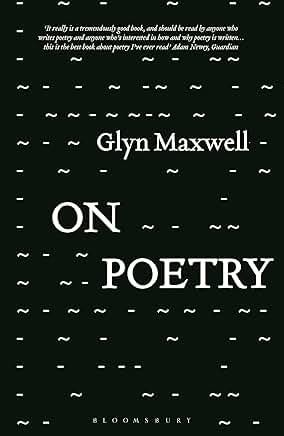
‘The best book about poetry I’ve ever read’ - The Guardian
***
‘WHITE
This is a book for anyone.
There are as many outlooks on poetry, on poets, on poems, on poetics, as there are people who read, but my book is for anyone. So forgive me if I leap as far back in time as possible to find a place where all agree.
*
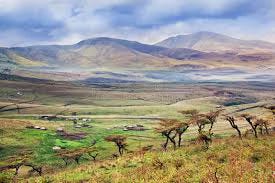
This far: alert, curious, more or less naked, without language, looking out over the green savannah. Now that was a leap, that’s an outlook. You see an open space with trees whose branches spread out near the ground and bear fruit. You see a river or path that winds out of sight, beyond the horizon. You see a few animals, you see changing clouds. You like what you see. Two hundred thousand years later you’ll call this outlook ‘beautiful; but the word’s no use to you now. Time after time, in the field of evolutionary psychology, the children of today, from anywhere on earth, in test conditions, point to this picture, choose it over all others - forests, jungles, mountains, beaches, deserts - as the view most pleasing to them. What are they looking at? What are they really looking at?
Well, evolutionary psychologists think they’re looking at this: an open space (we can hunt) with trees (we can hide) whose branches spread out near the ground (we can escape) and bear fruit (we can eat). We see a river (we can drink, wash, eat) or path (we can travel) that winds away out of sight (we can learn), beyond the horizon (we can imagine). We see a few animals (we can eat more), we see changing clouds (rains will come again, we can tell one day from another) and, all in all, we like what we see. What evolutionary psychologists - and I - believe is that aesthetic preferences, those things we find beautiful, originate not in what renders life delightful out even endurable, but in what makes life possible. Art, drawing, writing, poetry - are marks made in time by that gazing creature. Poetry has been unnecessary for almost all of creation. Strictly speaking it still is. But it happens to be my savannah, this strictly speaking, and it may well be yours, so let’s advance together, alert, curious, naked - or at least two of those - into our first landscape, admiring once again what we can’t be without.’ [2011].
***
2026: I now believe that pretty much all criticism of poetry is and always has been worthless.
Ancient, modern, contemporary poetics - especially that - is mostly horseshit. None of it makes sense unless it’s derived from the human creature, from breath, from blood, skin, oxygen, and it hardly ever is. Anything else is partial and filtered through the veils - psychological, cultural, political, personal - of the reader. This process repeats and establishes itself through the generations like a ‘dead-hand’ inheritance.
Listen to me instead.
Right, you can leave the Happy Class now if you want. We’re too many anyway. If you’re still here, follow me.
‘Oh, then I must be going, child!’ said Meet-on-the-Road. ‘So fare you well, so fare you well,’ said Child-as-it-Stood.